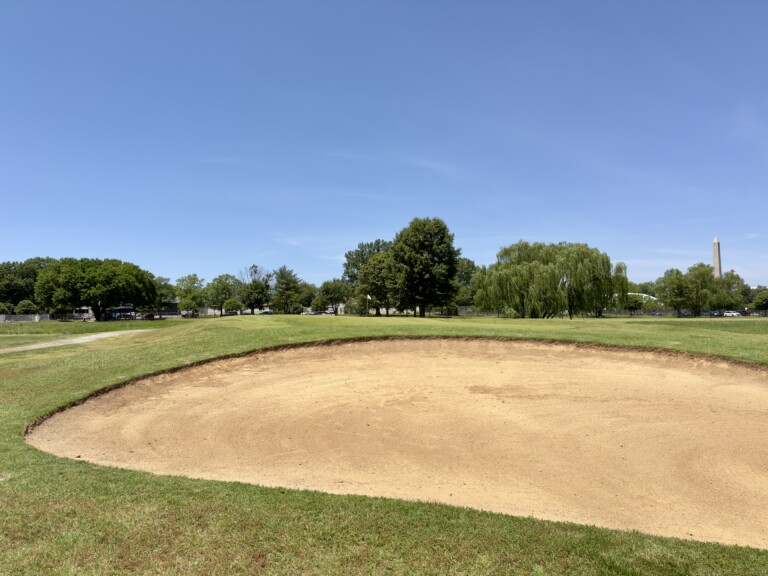
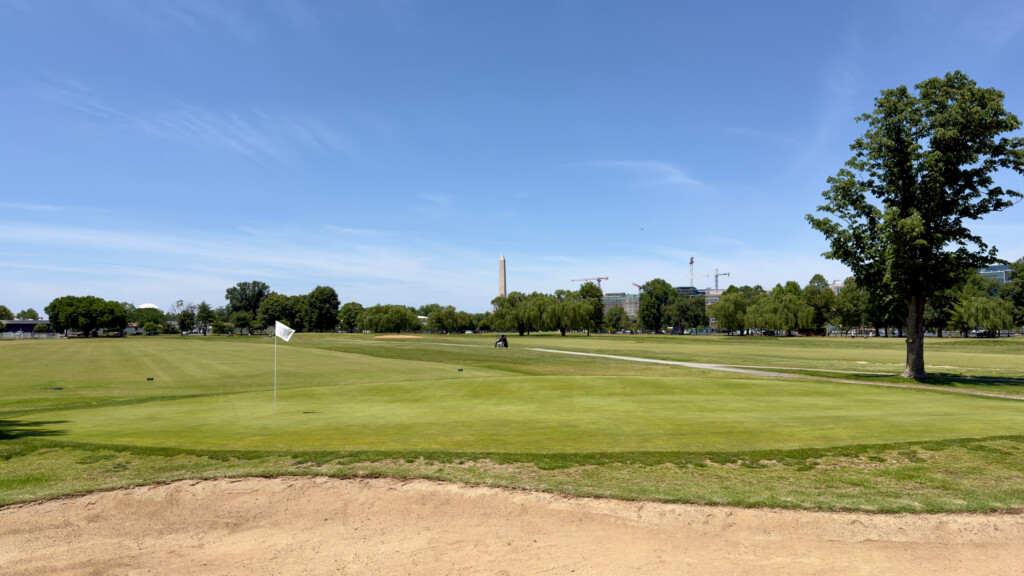
Most locals file the East Potomac White Course under “Hains Point’s executive course,” and that’s for good reason. It’s a short 9-hole track, 2,493 yards and par 34, that you can walk for $25 or less, and the operator, playDCgolf, even brands it that way. Though I think that classification carries a bit of a negative connotation and does some disservice to its history and intrigue.
A pedigree muni
For starters, it was originally designed by William Flynn. Yes, the same architect who designed Shinnecock Hills, and also locally Rock Creek and the U.S. Naval Academy Golf Club. The success of Walter Travis’ initial East Potomac course, the Blue Course, prompted a third nine on the property. The White Course, known originally as the E-F Course, was conceived as a complement to Travis’ two original 9-hole reversible routings and was completed in 1925. From there it became a bit of a Frankenstein.
Two of the original holes were repurposed for the G, now known as the Red Course. The driving range claimed the original 9th green. After the Army occupied it in December 1941 to house four anti-aircraft guns, Flynn was brought back to restore and redesign the course in 1944 (completed posthumously in 1945). Then in 1956 William Gordon and his son David redesigned Flynn’s last iteration. They reversed the routing and created new 1st and 7th holes. The construction of Buckeye Drive between 1959 and 1963 resulted in a re-routing of Gordon’s 5th and 6th holes because the road cut through the northern end of the course. The National Park Service removed the course altogether in January of 1983 in an effort to alleviate traffic congestion and add more open park space. Shortly after, the East Potomac Golf Association, a group of golfers including the senior and retired golfers who favored the course, petitioned NPS for its restoration. In August of ’84 Congress allocated half a million dollars to rebuild the course according to Gordon’s design.
That’s quite a complicated lineage that’s given way to a present-day track which for my money yields the most interesting greens and the closest thing to abrupt land movement at East Potomac. Unlike the Blue Course’s mostly flat and ground-level putting surfaces, all 9 greens on the White have some degree of elevation, and some of them feature multiple tiers. There’s also plenty of mounding accentuating fairways and hazards. Unfortunately, the largest mound now is debris from the East Wing of the White House, which has not only created an eyesore but also pushed the 9th tee box up about 30 yards.
This collection of 9 holes won’t change your life. And while the conditions have certainly improved since the National Links Trust began maintaining the property, the course is in rougher shape than its Blue Course counterpart. The greens and fairways are shaggier, the rough hungrier, and some dirt patches show through damaged turf. It still has a dive bar ethos, but there’s no sink in the bathroom and nobody asks questions (like why the official scorecard’s yardage doesn’t add up). However, it features four short par 4s that stand out to me as fun risk/reward holes and are worth the price of admission.
The four par 4s that pay for themselves
Hole #2 — 381-yard dogleg left
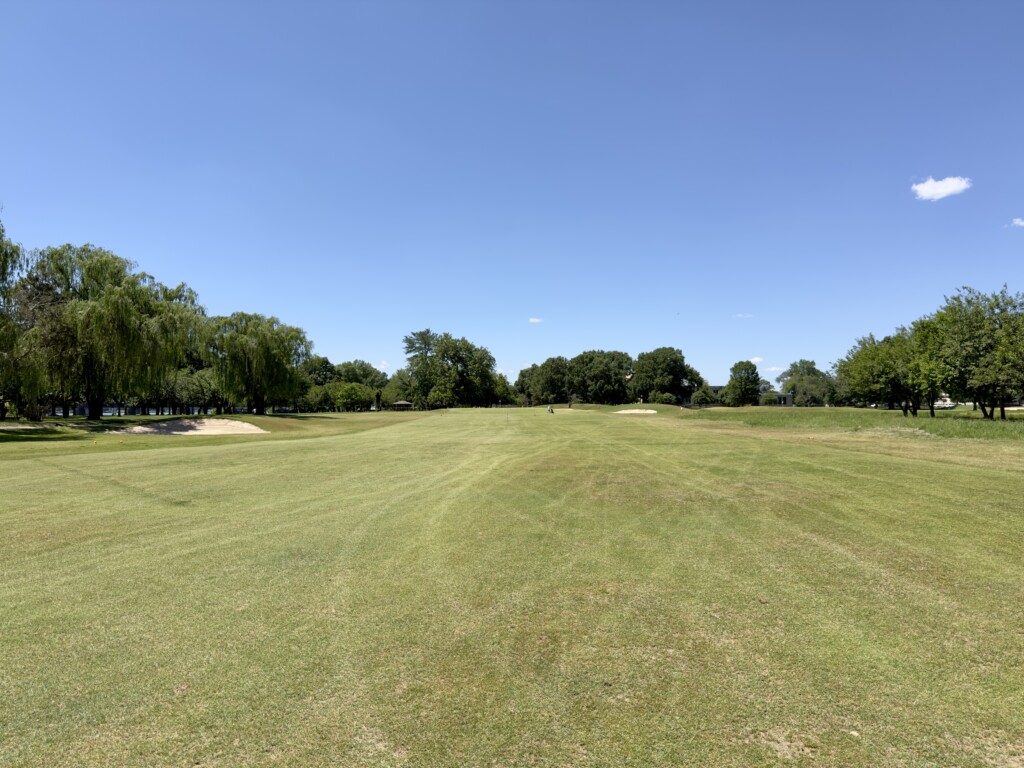
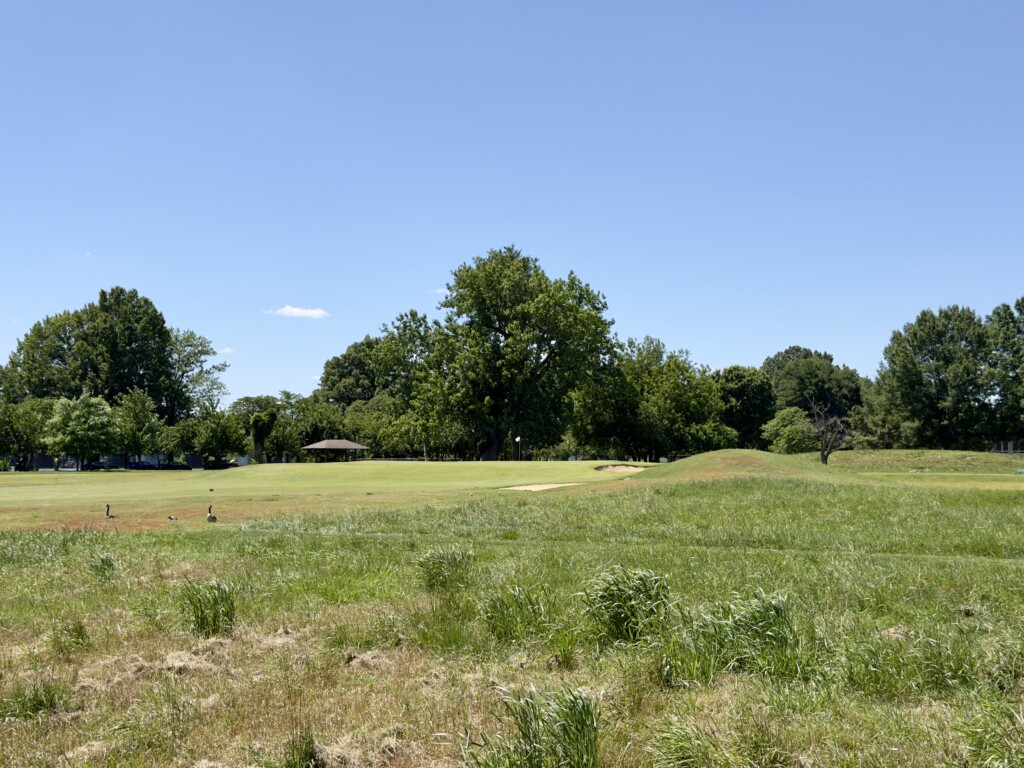
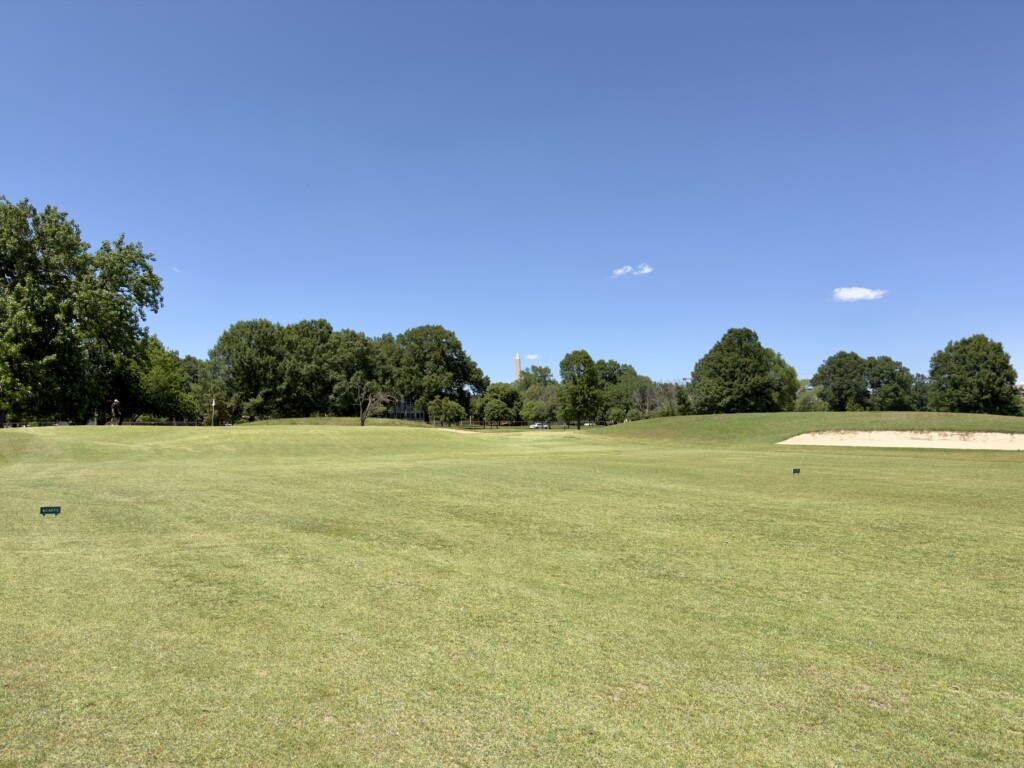
This is a slight dogleg left that plays 381 yards from the back tees, the longest hole on the side. It’s one of the tighter fairways on the course and it demands a precise tee shot. Five tall-grass bunkers guard the right side, while there’s out of bounds and a sand bunker (about 150 yards from the flag) to the left. The elevated green is the star of the show. Step on it off the tee and it’s receptive to flag hunting, lay back to a long approach and it’s big and slow enough for a three-jack.
Hole #5 — 247-yard risk/reward
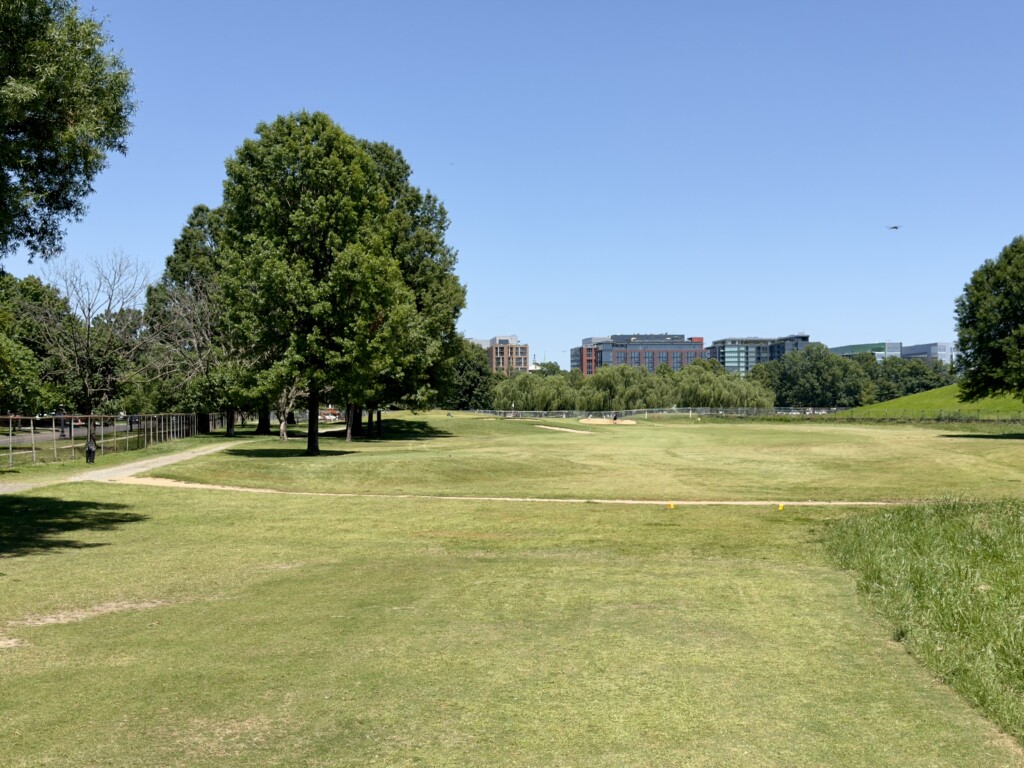
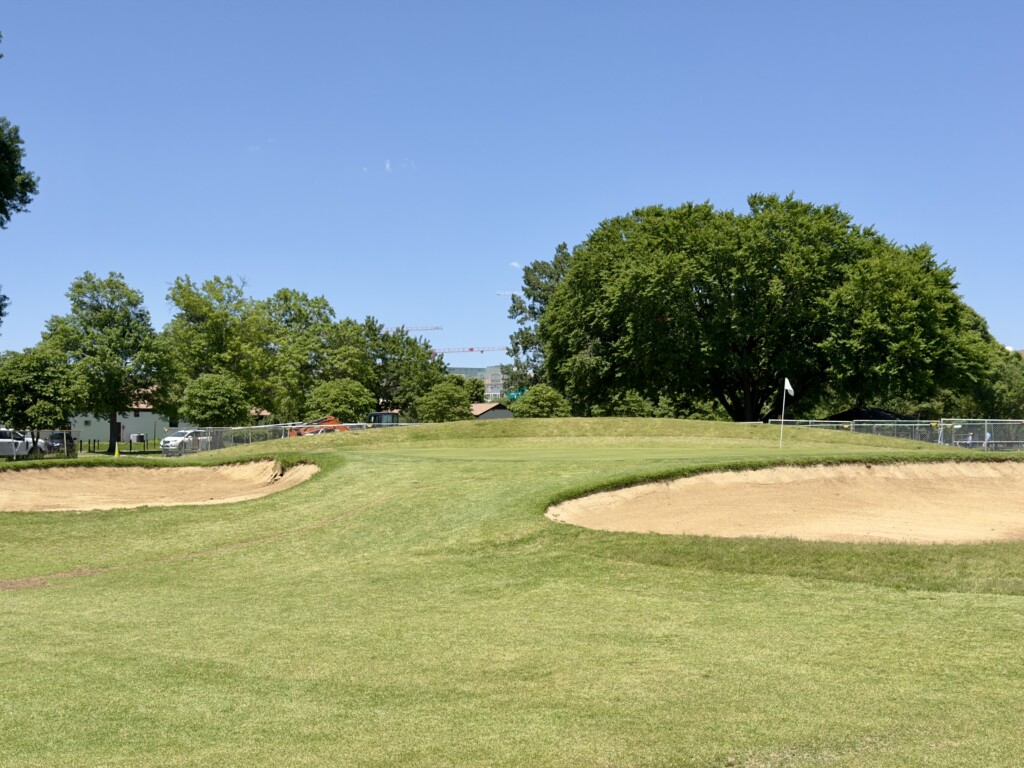
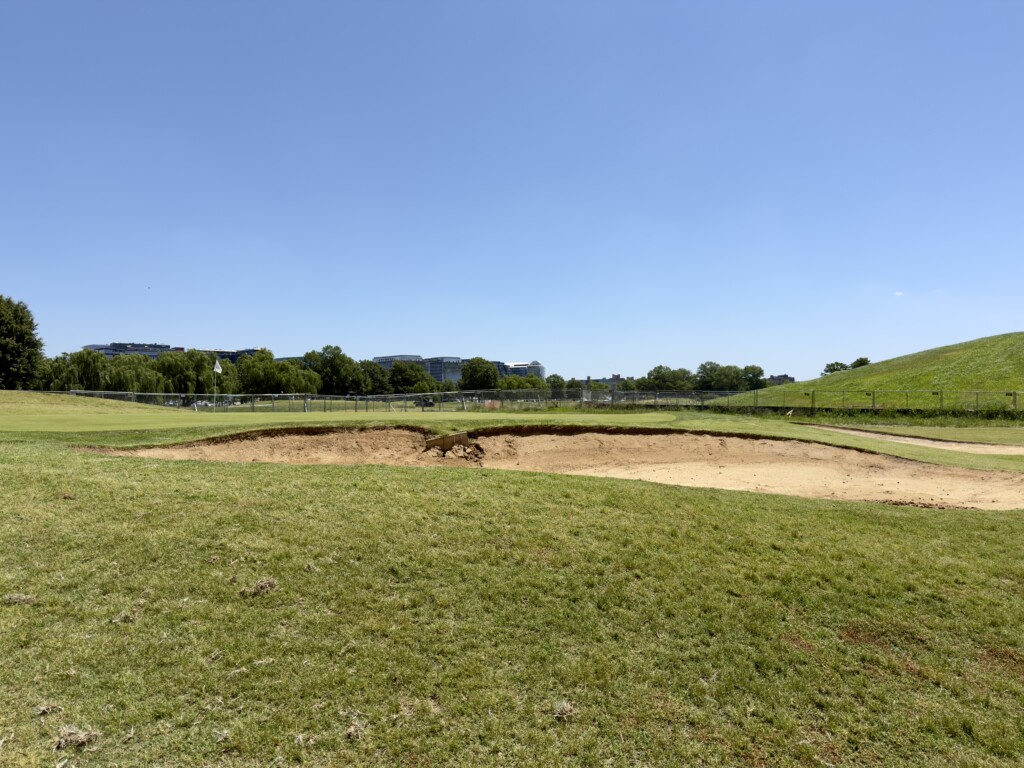
At 247 yards from the back, the fifth hole could be confused with a dastardly par 3, and up until NLT recently backed it up, it played as a moderate (174-yard) one. With that arrangement, a set of trees loomed just short of the green and forced the ball out to the right. Flighting a high draw that negotiated the bunkers in front of the green to make it home in regulation was a tall order for me (and I imagine a lot of other right-handed mid-cappers).
But as a paltry four, it offers greater variety off the tee. Better players can challenge the bunkers, contend with the drop off the back of the green, and go at the stick. Whereas the right side of the fairway opens up as a landing zone to the right of the green for longer players who want to pitch on in two, and a mid-iron off the tee doesn’t hurt you either. Though it’s a shame those trees are there because there’s some really interesting mounding along that left side that’s been lost in the shuffle. The best version of this hole would play with the trees gone at its par 3 distance.
Hole #7 — 355 yards into the mounds
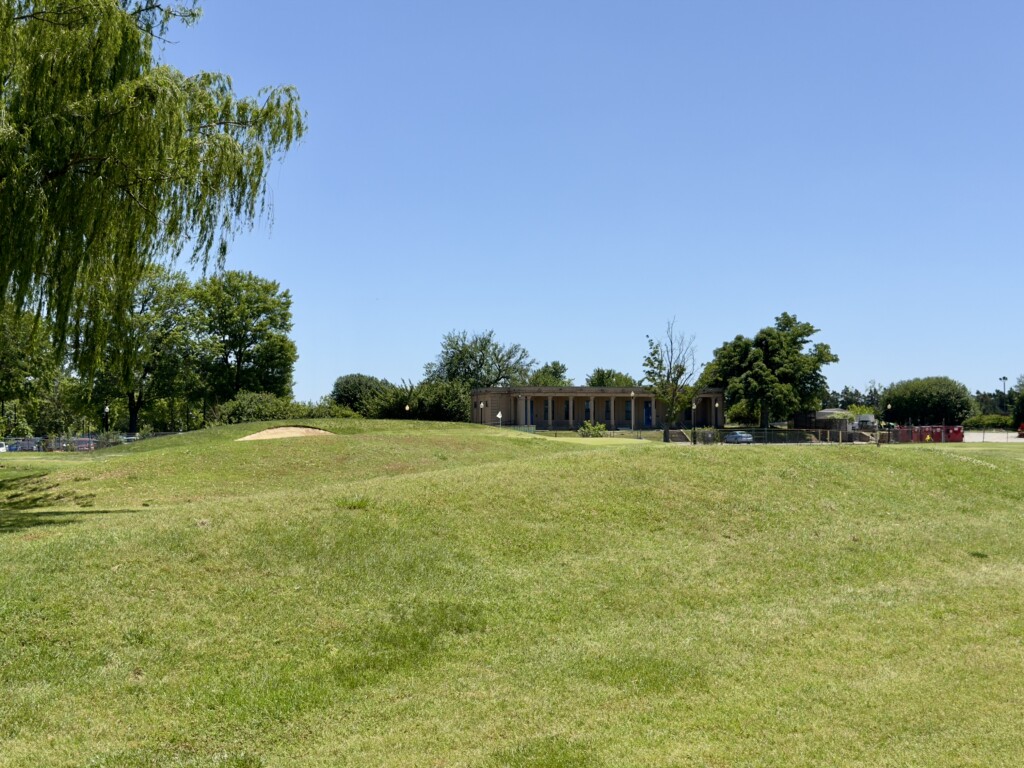
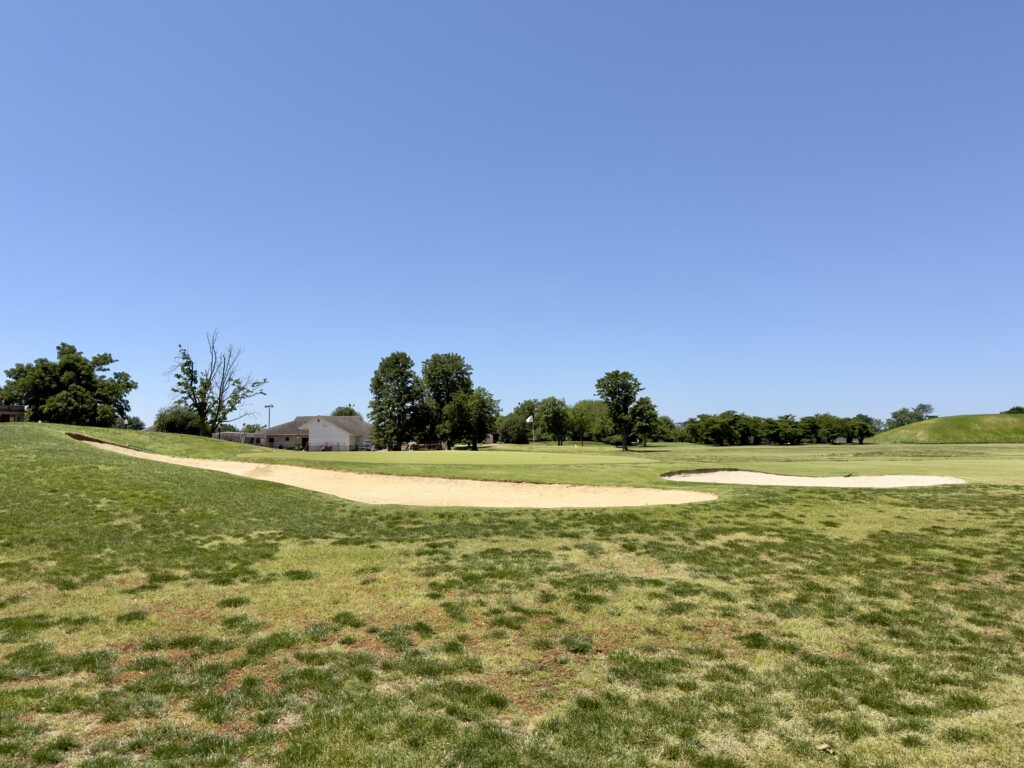
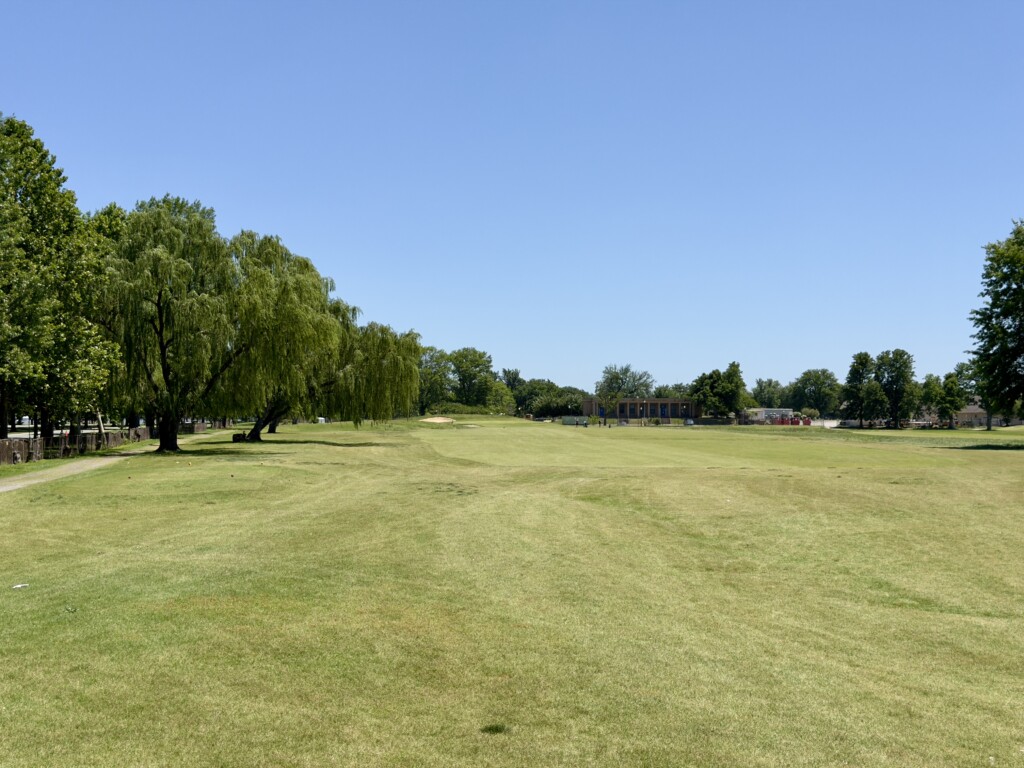
This 355-yard par 4, one of Gordon’s new holes during his 1956 redesign, has similar vibes to the second hole. While it’s more straight away off the tee, there’s out of bounds left, though with more breathing room to the marker, and a wider fairway extends into a sea of rough right. An elevated green waits in the distance. Within wedge distance (50-100 yards from the pin) up the left rough are the most impressive mounds on the property, three waves of earth crashing one after another. While the green is protected by a couple of sand traps, it has a substantial backstop that makes for a tough chip down or pitch over and up. So a long approach shot is bad, longer is worse.
Hole #8 — a delightful green complex
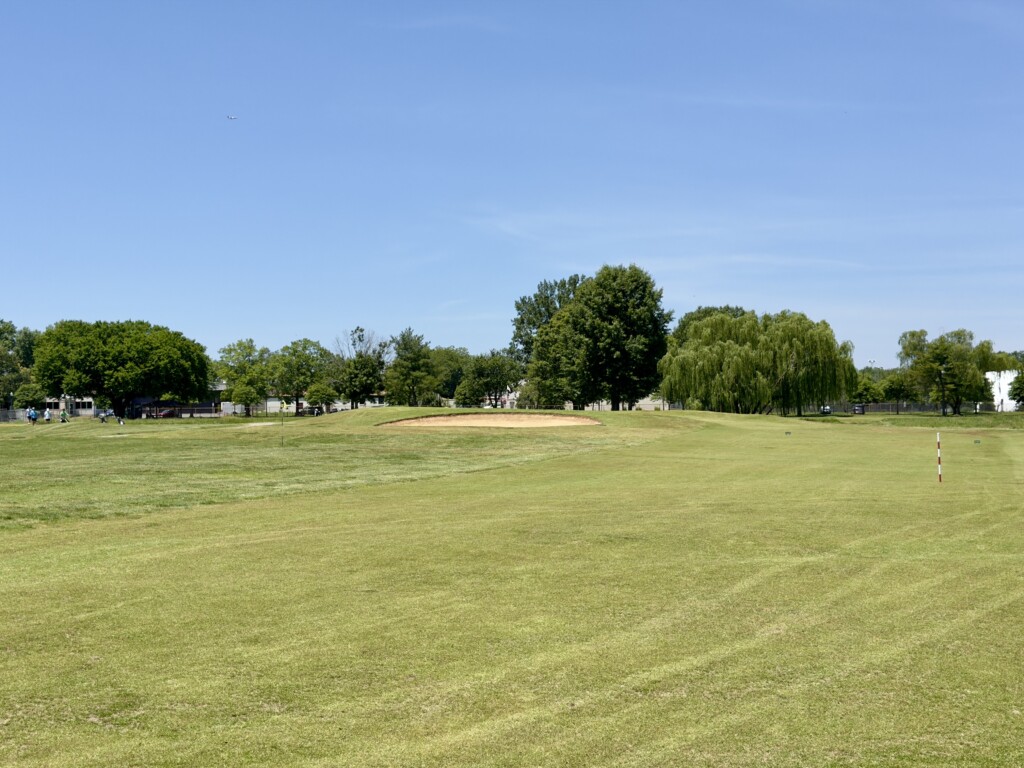
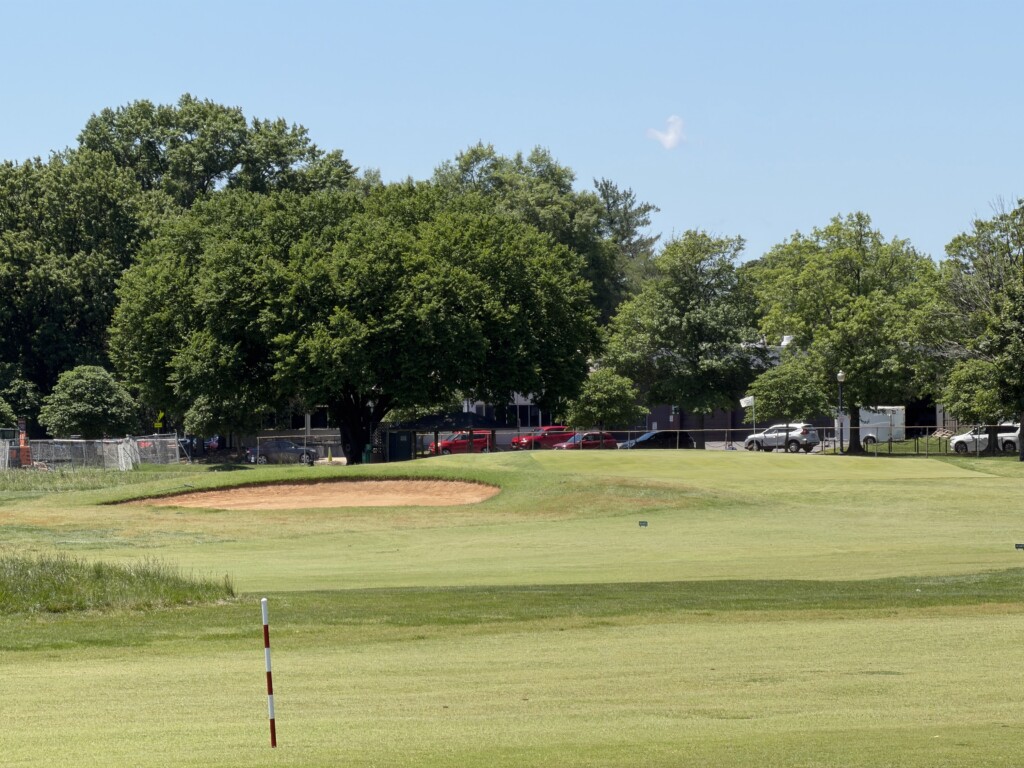
The eighth hole makes the cut simply because of its green complex, my favorite on the course. It’s two-tiered and it flows gently from the upper level. I’ve played some pin placements that evoked mini golf memories.
At 286 yards, I’m always grabbing driver even though the older I get the less often I have the gas to get the ball there. In my younger years I’d carry the bunker directly (about 260 yards to cover), but lately I’ve been trying to start it right and draw the ball up the putting surface. A strong downwind will have me taking dead aim, though in my experience the wind swirls a little more on this part of the peninsula. The tee shot is plenty forgiving, miss left as far as you want with the 9th fairway adjacent and a manageable mohawk of rough in between. Or go drop an iron in the middle of the fairway and challenge yourself to hold the green, which becomes fun and threatening when it firms up, shorter is better.
While the White Course won’t win any awards, if you think it’s beneath your game the architectural bones are worth at least one in-person look. Or bring a short set: a few irons, a wedge, and a putter, then practice ball striking on grass and elevated approach shots. Inexperienced players should enjoy a manageable challenge. Or if your group is like mine, it’s a convenient emergency 9 after a four-ball on the Blue ends all square.