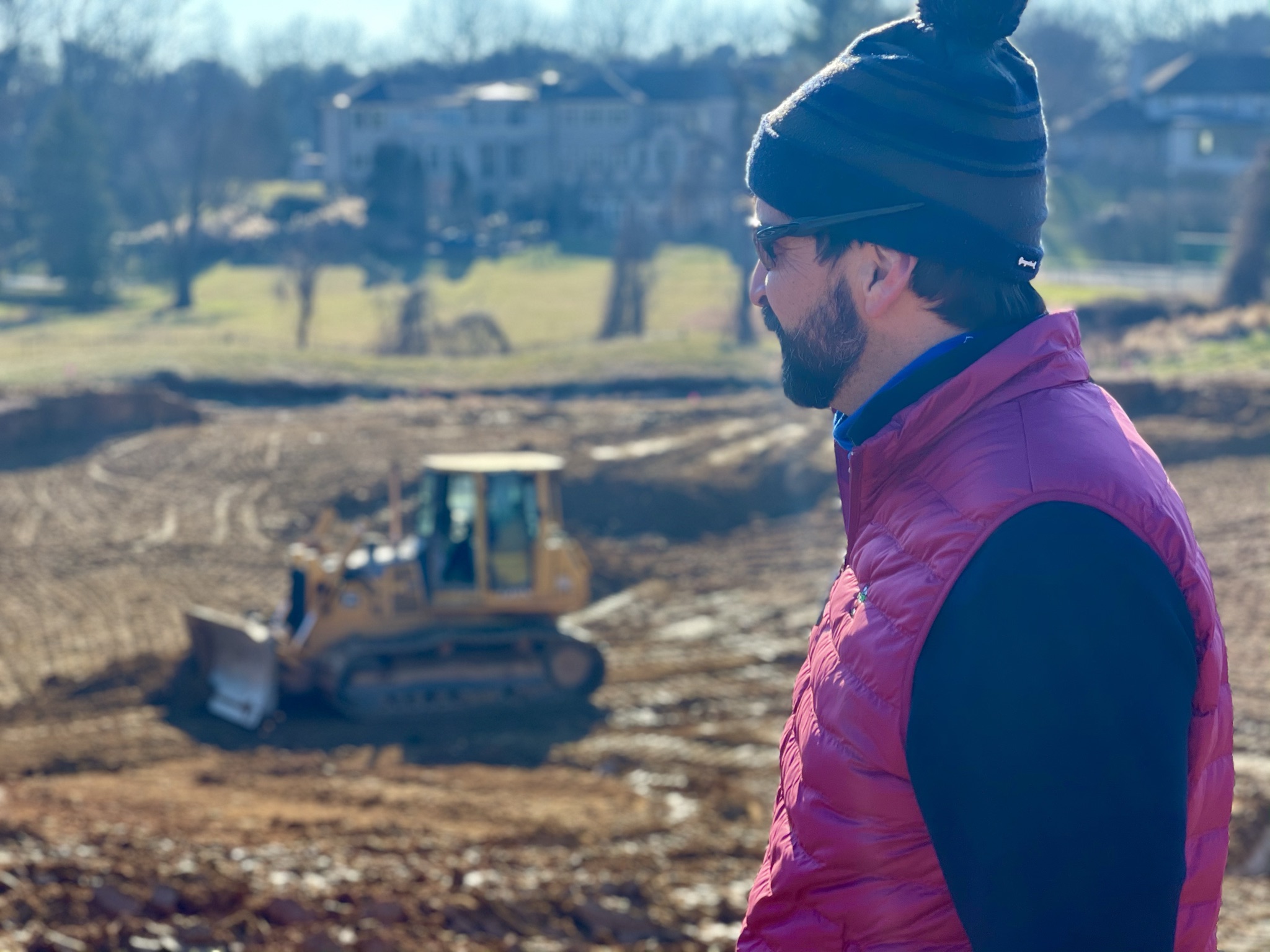
Andrew Green has spent the past decade quietly reshaping the most consequential ground in DMV golf. Congressional Country Club. Chevy Chase Club. The United States Naval Academy Golf Club. He’s the winner of back-to-back Best Renovation honors from Golf Digest for Interlachen in 2024 and Chevy Chase in 2025. That outlet also awarded him Best Transformation for Congressional’s Blue course in 2021. He is a 2001 graduate of Virginia Tech and the President and Principal Architect of A.H. Green Design/Green Golf & Turf, Inc, residing with his family outside of Baltimore. Golf DC interviewed Andrew by phone in an hour long conversation last week. The conversation below was lightly edited for clarity and brevity.
Congratulations on the recognition for your work at Chevy Chase. Willie Davis, Donald Ross, C.H. Alison, William Flynn, RTJ, and Arthur Hills all had their hands on it, with so many ghosts in the room, how did you decide on whose course it was going to be moving forward?
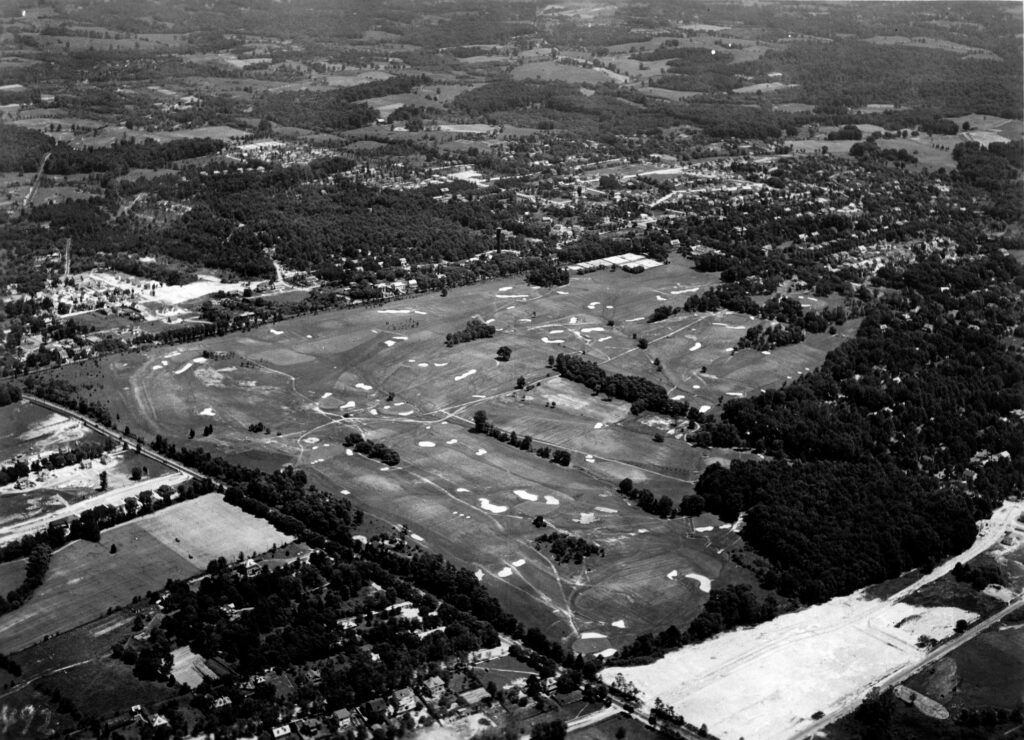
Yeah, interesting question. The pedigree of the club was so unique in that there was a level of Ross foundation with Walter Travis, he consulted and played the course and kind of offered opinion and some notes. And then Hugh Allison came in and had a fairly substantial overhaul of the golf course. And so what we ended up settling on was the historical documentation we had from the aerial photography period. So in that early ’30s timeframe, we started to look at a level of documentation that showed a very unique product.
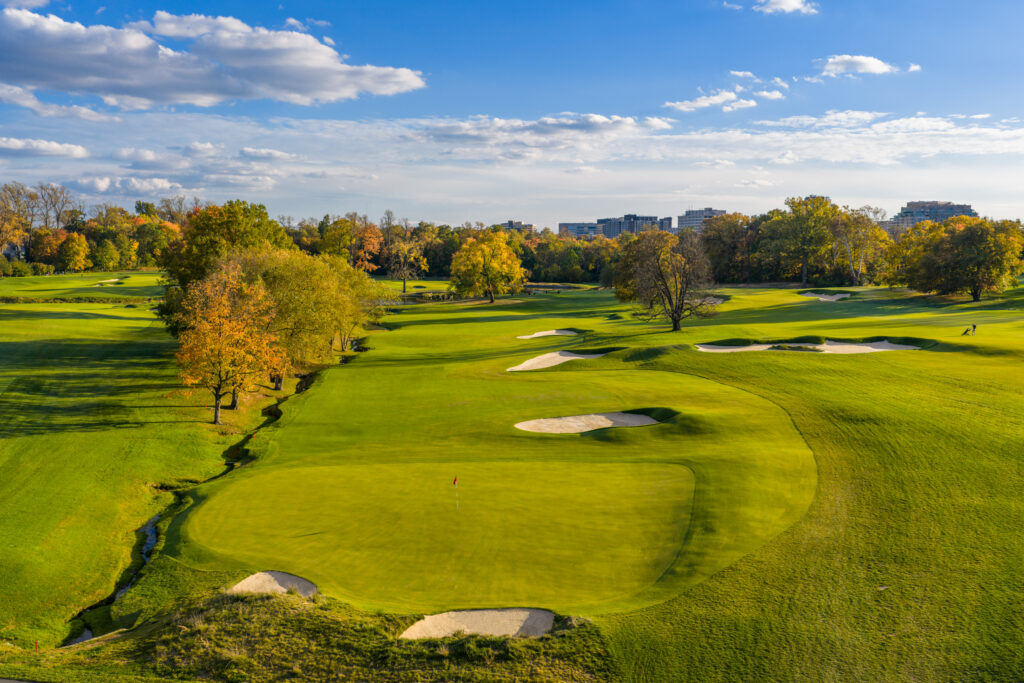
Greens were substantially placed in the landscape. They’re large and had a lot of interesting character in their shape, and the overall size of them. So we really leaned into that and coupled with that was this idea of making the golf course have a level of authenticity so that it felt old. I mean the club just oozed its history. I don’t know if you’ve been on property, but the minute you pull in off of Connecticut it’s like ‘wow’. There’s this moment in time in central DC and it was finding a way to create the future by respecting the past, as cliche as that sounds, and leaning into that historical period of photos that we had.
So we had an aerial that looked straight down on the golf course, and then we had a series from an airplane at an oblique angle that showed a little more detail. I relied heavily on that and then it was a question of modifying things for the modern game. Thinking about things that would make the game engaging and fun for their membership.
What are the things you have to consider for the modern game or modern golfer?
That’s a great question. Certainly fairway bunker placement and hazards off the tee. We want to make sure that the long player was challenged from every tee box. So drawing center lines from each tee and understanding where the better player from each tee would be hitting it on each hole. And then trying to layer the challenges, strategic lines of play off the tee so that there are numerous things to think about on every hole. Try to make it where you’re not pulling driver and just wailing at it all day long, that you’re thinking about position and potentially throttling back to gain an advantage on your approach or next shot.
Getting the ball on the ground, gosh, so many greens that were built in the 80s and 90s are so elevated. Part of it through construction processes and part of it just from the aerial nature of the game post-war, but getting the greens back down on grade and having approaches that relate to the putting surfaces allow for a lot of creativity. It allows a higher handicap golfer a little more room to maneuver their ball. For a good player, you can challenge yourself to front hole locations in different ways and those contours that are relating to the ground also work if you miss right or left. Then you have to recover over some interesting contours when you couple that with the big green sizes and unique hole locations. It makes golf day in and day out a lot of fun and different each time you tee it up.
While preparing for this interview I read an interesting quote from you: “I’m a believer that so much of the best golf in the greater Mid-Atlantic region was pushed over by the bulldozer between World War II and today. Anything with historic significance in that part of the world is gone” …
I don’t mean to be overly critical of the region, but it’s just a fact. Look, I’m Virginia born and bred. It’s a fact that golf architecture in the state of Virginia, the DMV and up through Maryland, there’s only a handful of examples of classic architecture that is representative of the Golden Age of design. The grasses in that part of the world are so hard to maintain at a high level that there’s a constant stream of thoughts, decisions, innovations, whatever with turf. Every time a club would go to regrass or deal with dead greens in August, they would bring in an architect or somebody to redo their golf course because they didn’t just want to do the grass. The golf started to become more sterile and more sterile and more sterile. I contend that the eight foot dozer blade impacted so many of these amazing places in a way that just kind of whitewashed golf in that transition zone. Right, wrong or indifferent, newer was better than original and in the combination of the struggles with turf everything moved away from that foundation.
The Golden Age guys were so stinking good because they couldn’t move dirt. They couldn’t change the landscape to fit their eye. They had to be creative about how to get from point A to point B. They used the land, and interesting positions for tees, fairways greens, bunkers. They used the land to just make stuff happen, and it allowed each golf course to have a strong sense of place and connect to their property. When the bulldozer got involved, architects started to manipulate all of those things for some kind of ideal picture of each golf hole. So when you go around the DMV and you look at a lot of the courses, they were touched by a similar style architect with a bulldozer, and that’s the golf a lot of us grew up playing on. Until I really got into this full bore and studied the work of these classic greats, I didn’t fully appreciate what the game of golf truly meant. I thought bunker front right, front left on every green was the way golf was supposed to be.
I think the biggest struggle in the DMV area is certainly in the public golf space. Public golf is hard. It’s hard to be affordable and make money and invest what it takes to have a modern facility. So many of the municipal county daily fee courses, they’re all in that post-war frame. Unfortunately, there hasn’t been a really good place to point a younger player or someone that doesn’t have as high a golf IQ to what it means to have that unique and special golf.
The Golden Age guys were so stinking good because they couldn’t move dirt.
Speaking of Golden Age public golf in the DMV… East Potomac Golf Links. What could we all hope for as an ideal outcome for that piece of property?
The reality is any golf course that’s lived 20-30 years without a major reinvestment, there are a lot of internal parts that are coming due to be addressed. When you think about the daily fee market, it’d be great to play golf for 20 bucks in the mid-atlantic, but I’m not sure that’s sustainable. Let’s call it in that 50 to 100 dollar range, it would be great to have some interesting golf that’s unique and special to the region that’s unique and special to each one of the properties. And so as the architecture evolves at these different spots, I think there’s a layer of potential and possibilities. And the folks that I think are tangential to all those moving parts, I think they have the best of intent to create something that is unique to each property, and respect the importance of each property. I think for the golfer, the thing we have to be careful of is making sure that it remains at some level of affordability. Golf is unfortunately expensive. And when you run the numbers on how many rounds of golf you need, at what price point, to own and operate a golf course, the math is tough. I’d invite anyone to do a little back of the napkin on what it takes.
The reinvestment in each one of those special properties that the National Links Trust has been in pursuit of is phenomenal. And ultimately, I think we’re going to have public golf in the DMV that is improved and sustainable for the future. I think we all have a little different angle of what we want that to look like, and play like, and how that ends up utilizing the spaces available, especially when it comes to East Potomac. The amount of space that’s there, the number of different land uses it currently has, and how it’ll ultimately come together.
Reading about the history of East Potomac Blue, inspired by the Old Course, the reversible design, would you feel like something’s lost there historically if that’s not preserved?
Absolutely there’s a level of reverence for the way that it came to be and what it represents. I think we can all agree that it’s incredibly tired at the moment and that if there’s a way to make it affordable and improve it, and I think that’s what the National Links Trust was in pursuit of, man, that seems like a high ideal.
Let’s take the historian hat off for a second. If we look at the modern game of golf in the United States, you have to think that the Fazio group is on the list of the most prolific American architecture groups since World War II. And that list probably also includes, obviously, Robert Trent Jones, probably Dick Wilson, Pete Dye, to a certain extent, Jack Nicklaus. There’s that group that really defined golf between, let’s call it 1960 and 2000. The question we’d all have to ask is, is a modern version of American golf what DC demands into the future?
It seems like a lost opportunity not to embrace the legacy of East Potomac and the original design that made it so special.
I’m struggling with that because the history of East Potomac is so strong, but I could see how someone could make the argument that if you’re totally forward looking, you would look to someone in that prolific architecture period to come in. I’m too close to it, and I don’t know if there’s a great right answer. There’s one side of the argument that’s looking at it from this modern future, what does golf look like in 20 years, and there’s another side that’s looking at the importance of the place, how it came to be. How it was vested in this idea of the Old Course. It seems like a lost opportunity not to embrace the legacy of East Potomac and the original design that made it so special. Unfortunately both sides are going to disagree, and I’m interested to see how it turns out. I’m hoping and praying for the best. And I think we’ll just have to see how the chips fall.
This interview was conducted days prior to the Fazio Group’s East Potomac design announcement. On May 14, 2026, Secretary of the Interior Doug Burgum unveiled the renovation design from Fazio Design, comparing the future of East Potomac Golf Links to iconic public courses like Bethpage Black and Torrey Pines and promising “championship-quality golf at affordable, highly discounted” rates for residents of the National Capital Region.
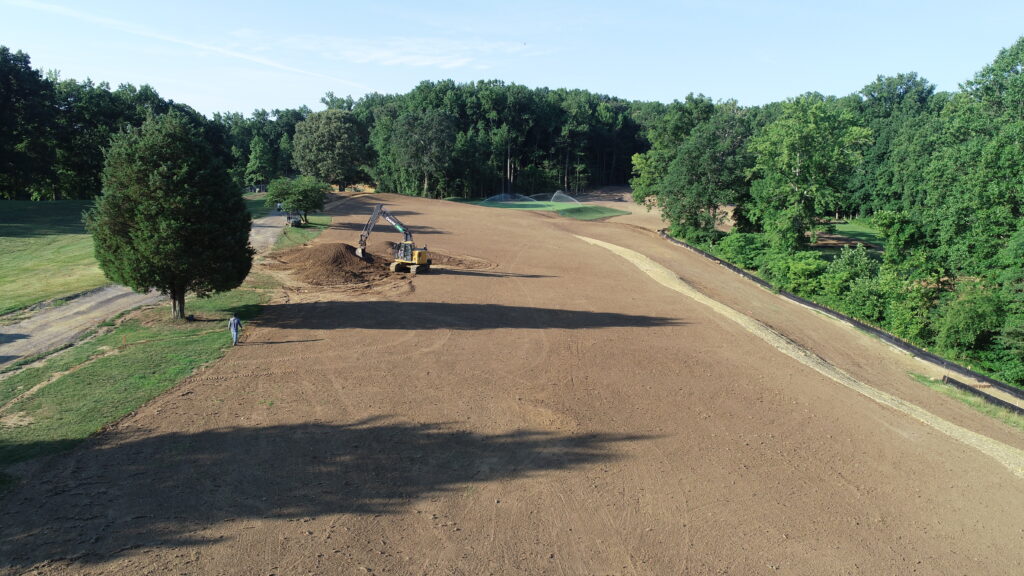
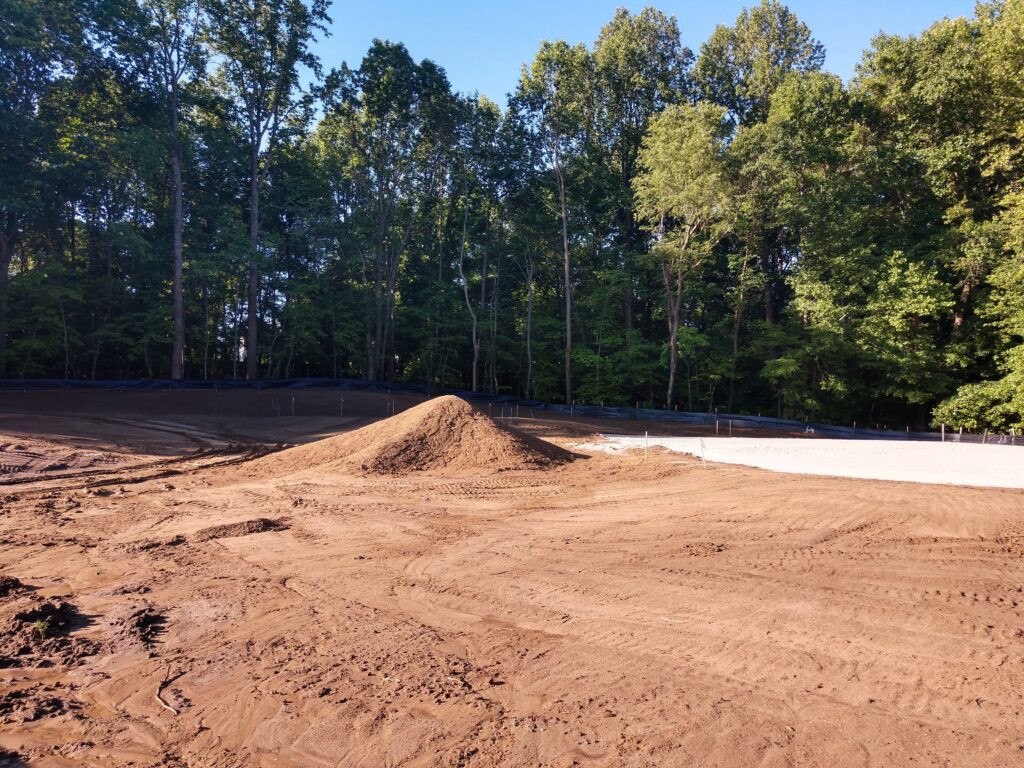
Segueing to a public option in Maryland that you worked on, The Preserve At Eisenhower, you took out all 56 bunkers. How’d that sales pitch go?
The existing bunkers were really in poor shape and it was a stress point to even try to maintain. When we go to construct features on the golf course, bunkers are probably about as expensive as anything per square foot, bunker maintenance per square foot is almost as high as greens. It starts to blow your mind of what we need to make golf great within the framework of what we have.
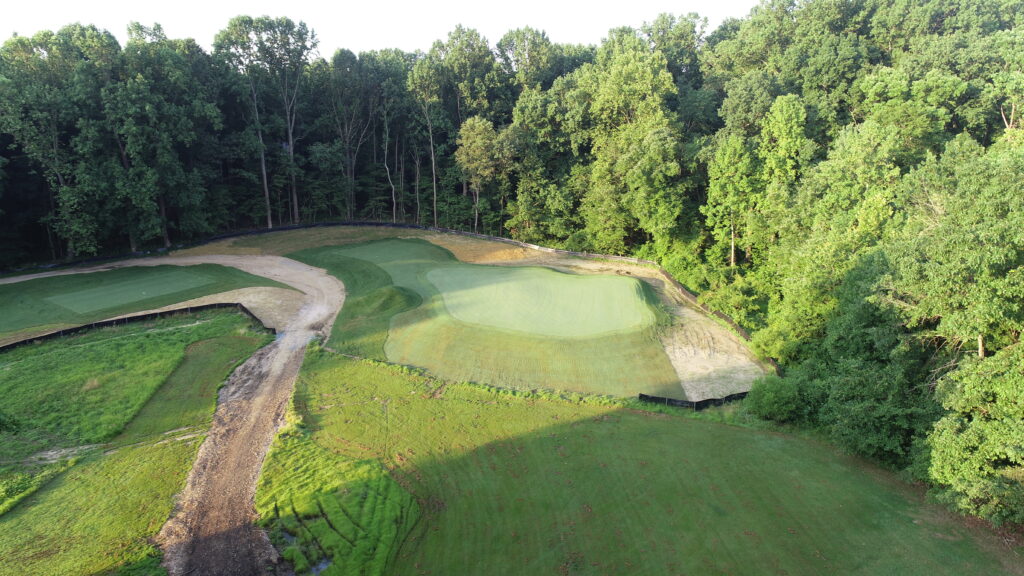
I’ve studied and read about a period of architecture called Alpinization, and it was developed, I believe, in Mid-Surrey over in the UK, and a group of guys and some golf professionals were trying to utilize landforms instead of bunkers as a thoughtful hazard. I brought that to the group and we started to play with how that could potentially work. I also recalled playing a golf course down in Salem, Virginia that has sand greens and pretty much one height of cut and a circle of sand and how you could still play golf and have fun. Maybe it wasn’t the most engaging thing in the world, but it was still golf.
So I thought, let’s get rid of the bunkers. Let’s see where we could do some of this mounding work as well as some low areas. Let’s introduce some shortcut in and around the green complexes and let’s create a set of greens that are uniquely shaped and contoured and allow the daily fee golfer to see what a higher level of architecture could be.
I think since then, the maintenance of some of the things that I was striving for have come off center a little bit, and that’s mainly with some of the taller grass. There’s some areas where I’d rather you not be losing your golf ball. Overall, incredibly thrilled with the way it came together and the way we pulled off an interesting golf course without any sand.
Do you think the Alpinization provides a similar challenge in terms of the penalty of a bunker, but approached differently?
The overall intention was hopefully get your hands on it and play it. And that’s where some of them are maintained a little more severely than I would like. I always felt like any kind of graded feature was more of a balance than sand. Sand tends to not intimidate a good player, but a higher handicap player in the sand is mind-crushing. You stand over the ball and just worry you’re either going to leave it in the bunker or skull it 60 yards. So I always felt like some sort of graded feature kind of creates a balance, all players have to think about it. The better player tends to overthink the way that they’re standing over the golf ball, the way the club path is interacting with the ball itself, and then how you’re shifting your weight among other things. That was really why I felt strongly that we could utilize the mounding and make it work.
So they add a little more balance…
That’s where my head is, for sure. Certainly you get an awkward lie, no matter your skill level, it’s going to be challenging. It always felt like if a player could get their hands on a club that they know gets the ball in the club face they can advance it, or get it close to the green, or bounce and roll it onto the green versus having to lay the face open and understand how to accelerate through the ball, but at the same time take the right amount of sand to generate spin and control. That’s where I see the balance of those graded features. From a professional standpoint, I think I intimidate the professional player more with some of that mounding than I ever did with sand.
Congressional Blue, a big project, I haven’t had the chance to play it, but from what I’ve read, the only thing that you kept were the hole numbers and the par on each hole. What did the pitch of that transformation to the membership look like?
Congressional was the childhood major championship venue growing up in Southwest Virginia that was by far the closest place where major events were occurring. I raked bunkers there in ’95 for the Senior Open and then actually walked on fairways in ’97 for the US Open. Amazing opportunity to be their architect, and if you recall there’s a little bit of drama with the previous architect. They kind of had to switch gears.
A little known story is that I was nervous to follow Keith Foster and some of the drama that had occurred because I was afraid that no matter what I would present, project, envision, that it would either be compared to, or somehow handcuffed, by some of the things that had happened. I put my faith in the idea that we could create something truly special, one of a kind, if we could work limitlessly on the property, and that I could work with Pete Wendt, the superintendent, Jeffrey Kreafle, the general manager, Jason Epstein, the golf professional. The four of us worked very closely together, bouncing ideas off one another, trying to maximize the opportunities that each corridor gave us.
And then I had an amazing group of members. The committee I met with regularly was full of support. Bev Lane, the club president at the time, was a real backbone of the entire group. We all embraced this idea that the club had been put in a pretty tough position, and that we were going to do everything possible to create this amazing place for the members to play, for the world to see, to match the glory of the Blue Course to what had previously been held just mainly as a love for the clubhouse. Actually in my interview, I showed a Google search “Congressional Country Club”, and I clicked on “images” and I screenshotted the results. There were 0.0 pictures of the golf course. I said to the group, ‘we need to make sure the golf course is on level with the clubhouse.’ And so we started to work through all the options and opportunities.
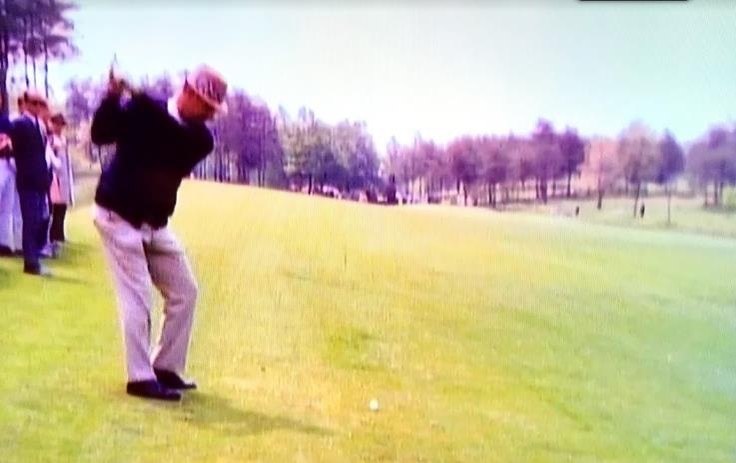
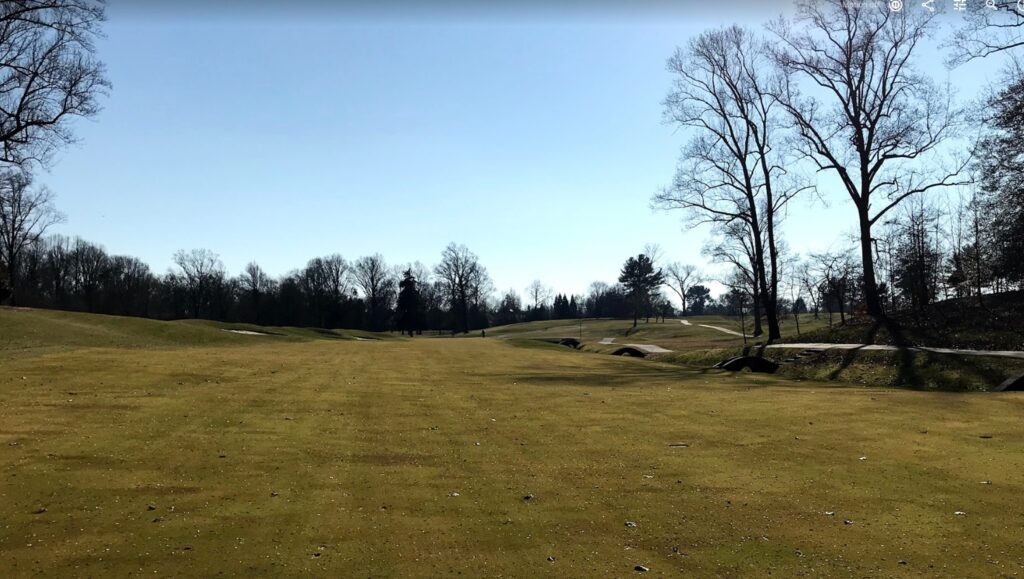
The first hole was so flat, so many of the golf holes had become so flat. I used a picture from “Shell’s Wonderful World of Golf” of Sam Snead standing in what is the current 11th fairway and the ball was crazy below his feet. He really had to stretch to get it, maybe it was a 3-wood or something he was hitting at the time. Then I showed a picture of it before we started, and it was the most level lie anywhere in the world. There’s barely enough slope on it to drain. I said, ‘Listen, we got to engage the ground. We got to move enough dirt to get the ball above and below the player’s feet. We need to play uphill, downhill. We need to try to find golf holes of varied lengths. And then we need greens that are interesting.’
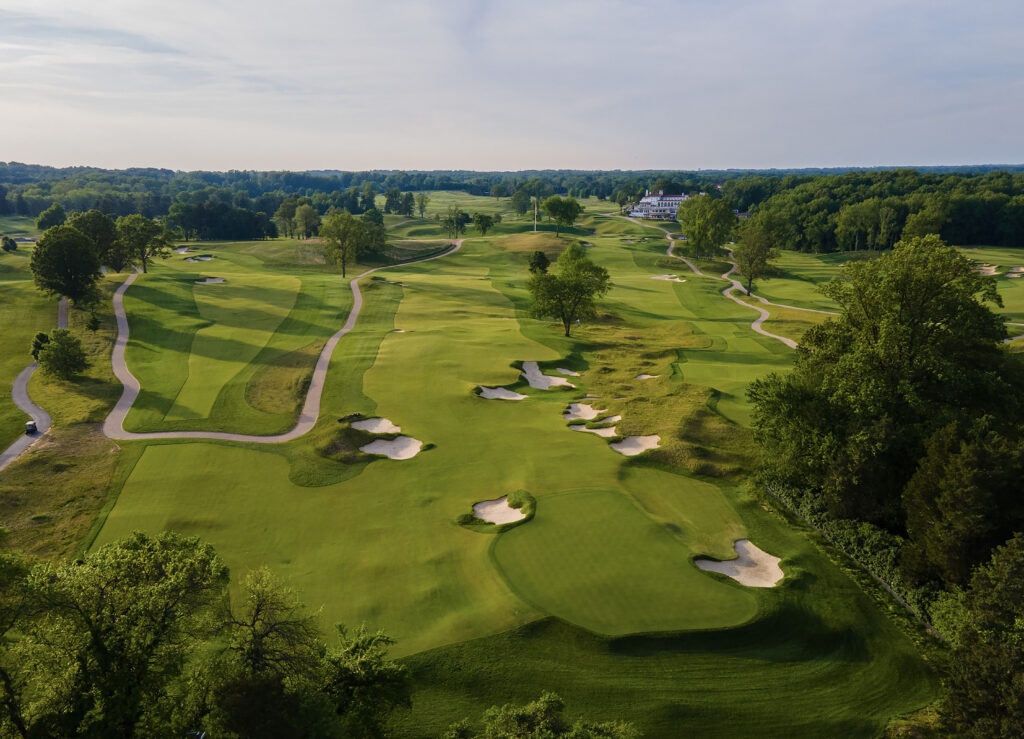
We started to rally behind this idea that the putting surfaces should be fun at a speed of 11 to 12, and not need to be 13 or 14 to be challenging. Somewhere between a 10 and a 12 is about all you could ask of a golf course in the DMV during the summertime, and be rock solid. So the greens have a lot of contour, they have a lot of interest. Before you were going to be really hard pressed to ever three-putt, and now putting is a very big part of playing the golf course. We thought about making sure you had every club in your bag, and then we really went to work on the close of the golf course, especially holes 14 through 18. Thinking about having each of those have a lot of uniqueness and personality, and that we do everything we could to build to that kind of crescendo as you pop over the hill after hitting your tee shot on 18.
With the upcoming professional tournaments Congressional is hosting, you have to consider the best players in the world playing the course all the way down to the members. How do you design for pros and the members?
We certainly thought about the variety of setup opportunities. It starts at the greens where you’ve got a ton of different hole locations on every green, and each whole location provides a little different challenge. It allows somebody like Kerry Haigh [Chief Championships Officer for The PGA of America] to come in and be really thoughtful and use the canvas to create a challenge.
For a long player, I did the best I could at the time, and hopefully we don’t have to touch it again leading into ’30 [PGA Championship]. I moved a bunch of high points or tee boxes because the previous golf courses had been designed when the golf ball flew, you know, maybe originally 225 and then the last version of the golf course, somewhere 250, 275. And now the ball’s moving 300+, 325. I drew center lines out to 325, even out to 350 and started to look at where the golf ball would be landing in the landscape. And I tried to find ways to get it so it would land on the upslope, or on the top, and not on the downslope. The changes in the golf ball had allowed a long player to fly over those high points and then gain another 30, 40 yards of release.
So I’m thinking primarily like number nine. We worked on number three to a certain extent, number six. There’s holes on the front nine where there were a couple ridges running across. I manipulated some of them in the earthwork to try to better position where the golf ball is supposed to come to rest. Thinking about the excitement factor and how we could create a challenge where, Augusta is so great because it goads you into trying to be bold, and then if you make a mistake, you make a big number. Having some of those opportunities with the position of hazards and trouble.
The feedback from the first time the KPMG was played there, I really enjoyed it. I got to spend some time with about a dozen players the day after the event finished and loved to hear some of their feedback. My job there is not to make them feel warm and fuzzy inside. My job there at times is to leave some doubt and put them in a position that they aren’t used to. Number nine is one of the hardest holes on the golf course, but it’s a par five. Nowhere in the rules of golf, in the history of golf, or anywhere in any kind of dialogue about what makes golf great, does it say that a par five is an easy birdie hole. So nine is tough, it’s really hard. It’ll be interesting to see how the best players play it. I really enjoyed some thoughtful responses from the Senior PGA two years ago. I spent about an hour on the phone with Stewart Cink after that event. He had some great thoughts that were spot on and I could sense that he had really thought about the week and how the golf course presented a challenge to him and how he faced it.
Nowhere in the rules of golf, in the history of golf, or anywhere in any kind of dialogue about what makes golf great, does it say that a par five is an easy birdie hole.
From the member side trying to get greens where you can bounce the ball in, that continues to be something that means a lot to me. For the most part you can bounce the ball into most of the greens. Number 10 is a little tough to do that, number six is a little tough, seven. There’s a handful that you got to be a little more aerial with, but that is one thing to try to make it more manageable for the member. Certainly some of the hole locations that are a little more graceful towards the center of the greens allow it to be set up a little easier, but I don’t think we wanted the Blue Course to ever feel like a pushover. I don’t think we ever wanted a single golf hole there to be forgotten. Even to the members today, I hope they’re embracing how every time they tee it up on the Blue Course they’re facing a little different challenge. There are some things there that are a pain in the butt to negotiate, places you can’t hit it and be successful. I guarantee you throughout the membership there are stories of epic recoveries from places that seemed impossible, and that’s one of the things that make the game of golf so great. I’ve heard more from people that have come to play it as a guest talking about how they used to come play Congressional and they couldn’t remember a single golf shot, and now they come play the Blue and they remember every one.
Your first original designs [Firefly in Tennessee and Kawonu in South Carolina] are opening for full-time play soon. Do you think we’ll ever get an original Andrew Green design in the DMV?
I would never say never. We can see across the DMV, the value of the ground is putting so much pressure on anything that’s open space. It would take a really unique opportunity and set of circumstances for it to come about. There’s some potential there, I would certainly love to do it.
Somebody asked me the other day where’s the greatest piece of property that doesn’t have a golf course on it. I said well if you’ve ever driven from Charlottesville to Interstate 66 on 29, there’s some amazing golf ground there that doesn’t really have golf on it. And I guess that’s a little outside of the DMV. I never say never, but I think it’s going to be hard-pressed just due to the constraints of the land dynamics.
All images were provided courtesy of Andrew Green.